
The Door Frame Decision That Catches Up With You Later
Check the bathroom door frame in any apartment that’s ten years old. Run your hand along the bottom edge near the floor. On a wooden chaukhat, there’s a reasonable chance the surface has softened or started pulling away from the plaster. That’s not a construction defect. This is the problem WPC Chaukhat was built around.
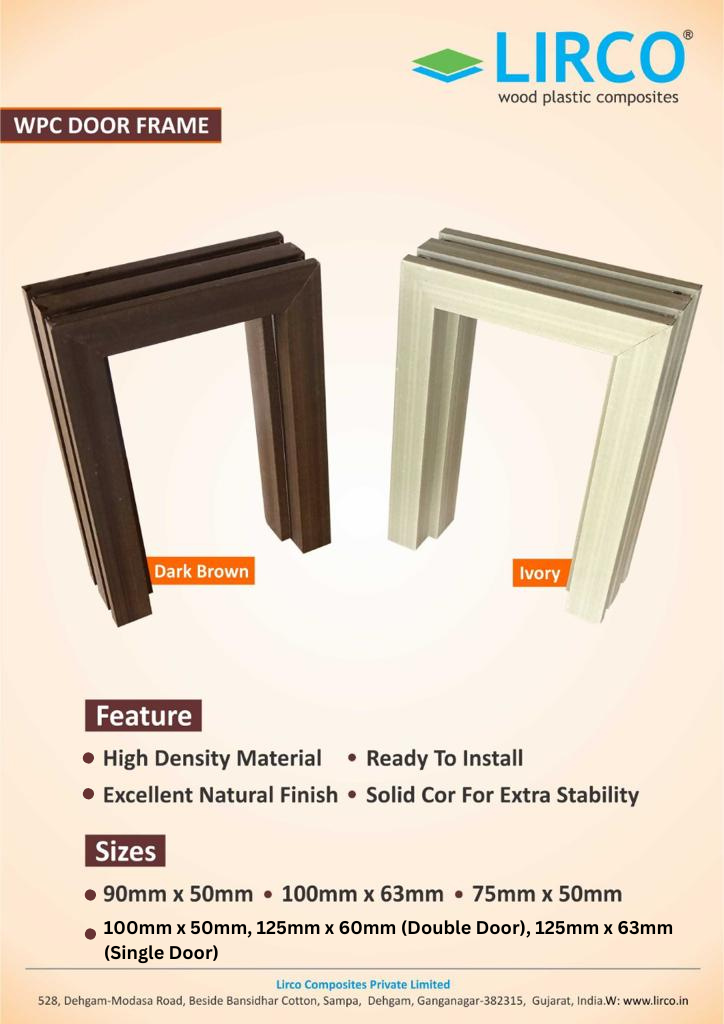
WPC Chaukhat is the standard Hindi term for a door frame – the border fitted into a wall opening before the door shutter is hung. When it’s made from Wood Plastic Composite instead of timber, its relationship with its environment changes fundamentally.
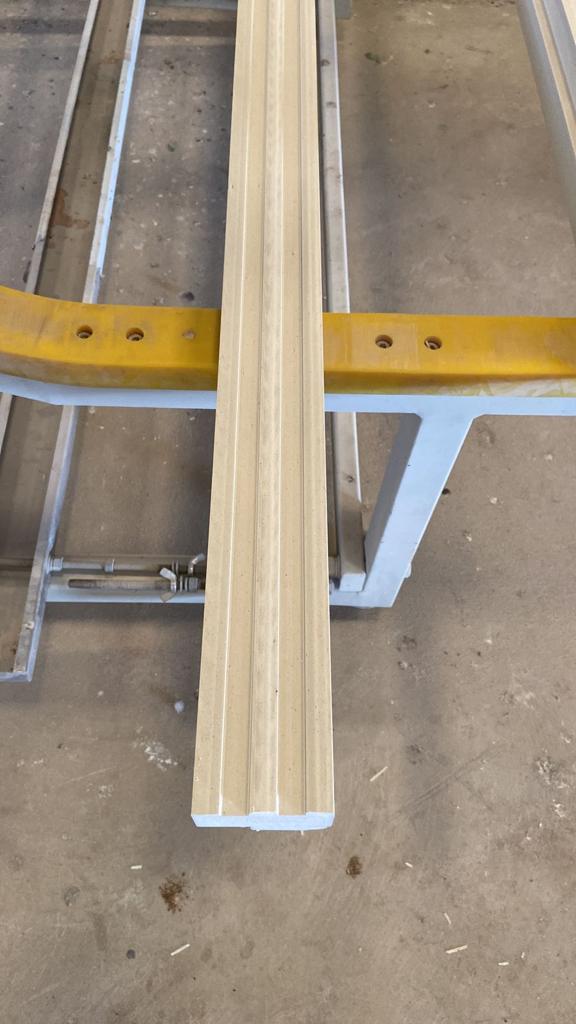
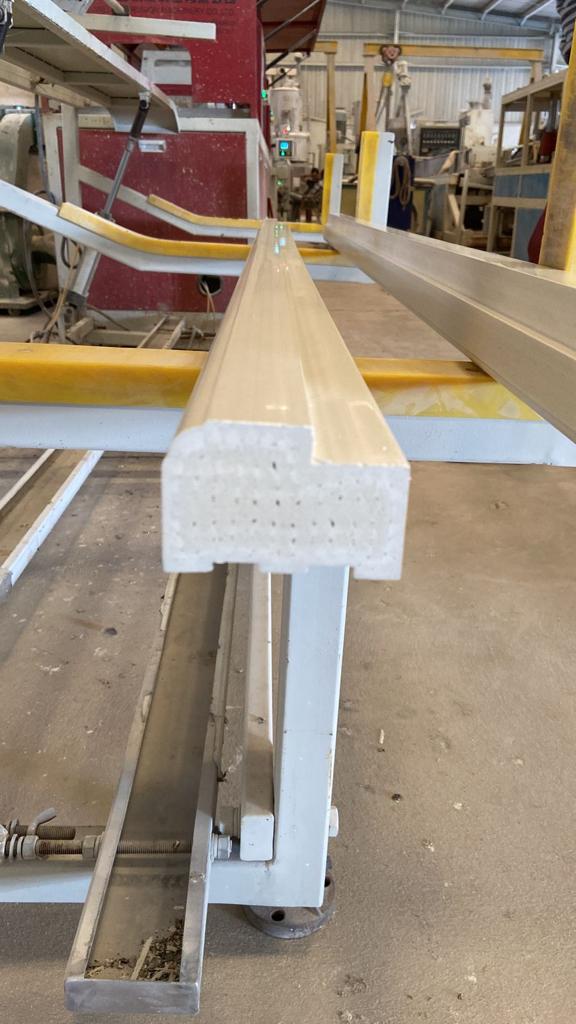
WPC is produced by combining wood fibre with thermoplastic polymer under heat and pressure. That process matters because it gives the material two useful qualities that usually don’t coexist. It works like timber on site – drills cleanly, cuts without splintering and holds screws with real grip. Carpenters don’t need new tools or new techniques. Installation is the same as a conventional wooden frame.
What’s different is the decade after installation.
Moisture is forced into the frame’s base by wet flooring. Timber absorbs this gradually – the swelling is slow enough that no one notices until the door starts binding. Paint separates from the surface.
Hinge screws begin to work loose because the wood underneath them has softened. By the time the damage is obvious, it’s usually been developing for three or four years.
WPC absorbs none of that. The polymer matrix surrounding the wood fibre creates a material that doesn’t participate in that cycle. Humidity fluctuates; the frame sits there unchanged.
Termite resistance isn’t a coating or a treatment – it’s a function of the material’s composition.
Termites need exposed organic content to feed on. In WPC, the wood fibre is sealed inside the polymer. There’s nothing accessible.
No pre-treatment required before fitting. No post-installation sealing needed. The profile arrives ready to fix into the wall.
Screws hold over time. Hinges stay aligned. On a wooden frame in a damp room, the hinge screws are often the first thing that fails visibly – the wood compresses and the screw loses grip. WPC doesn’t compress under load in the same way.
The frame won’t change seasonally if it is dimensionally stable. Timber swells and contractsdramatically in regions of India where the monsoon months are quite humid and the summers are dry. Doors that close perfectly in January start sticking in July. WPC doesn’t move with humidity changes, so the relationship between frame and shutter stays consistent year-round
At the time of purchase, a WPC chaukhat is more expensive than a simple timber frame. There’s no use in acting otherwise since that’s the reality.
What that comparison misses is everything that happens after installation. Wooden frames in wet areas generate callbacks. They need repainting. Some need chemical retreatment for termites. Some need early replacement. Track those costs across a 20-unit building over 15 years, and the cheaper frame at the start is rarely the cheaper frame in total.
This is increasingly the calculation that contractors and project managers are making – not just what the frame costs today, but what it costs across the life of the building.
Bathrooms and utility areas are the obvious fit – any space with regular moisture exposure. But WPC chaukhat works equally well in bedrooms, living spaces, and commercial interiors. Ground-floor units where subsoil moisture is a concern. Coastal cities where ambient humidity never really drops. Older buildings in termite-prone areas are being refurbished.
Performance is consistent regardless of floor level or room type. No version of this material is good for dry rooms, but borderline for wet ones
Anyone sourcing WPC products across a project knows that quality varies considerably between suppliers. Off-dimension profiles, inconsistent density between batches, surface issues in the first year – these are common complaints and they usually trace back to manufacturing control, or the lack of it.
Lirco is a leading WPC chaukhat manufactures in Ahmedabad, Gujarat, India with controlled density and accurate profiles. We directly provide builders, contractors, and dealers, and we are accessible to talk about specs for continuing project needs
a door frame composed of Wood Plastic Composite rather than wood. WPC offers practical benefits as it can’t absorb moisture. It requires little maintenance once it is in the wall. These qualities are especially critical where wetness is a constant. For ex. such kitchens, restrooms, and ground floors.
It’s the structural frame fitted into a wall opening before the door is hung. Built from WPC, it holds its dimensions and condition regardless of moisture exposure, pest pressure, or
temperature variation. No swelling. No termite risk. No periodic maintenance requirement.
The conversation has shifted from upfront cost to lifecycle cost. Once builders and homeowners start accounting for what callbacks, repainting, chemical treatment, and eventual replacement actually add up to over ten or fifteen years, a frame that simply doesn’t need any of that starts to look like the more sensible investment.
WPC means Wood Plastic Composite. “Chaukhat” is simply a Hindi word for a door frame. Put the two together. You’ll get a modern, heavy-duty door jamb. It completely bypasses the headaches of using standard solid timber or cheap hollow alternatives.
Water-resistant is more precise. WPC doesn’t absorb moisture the way timber does – it won’t swell, soften, or separate from the wall in damp conditions. The problems that routinely affect wooden frames in bathrooms or ground-floor areas don’t apply here. For construction purposes, that level of resistance is exactly what’s needed in most Indian building environments